|
Dollar
Homeschool Bringing Back American Education |
|
|
||||
History and
Science Part of the Eclectic Education
Series
Part of the Eclectic Education
Series |
History
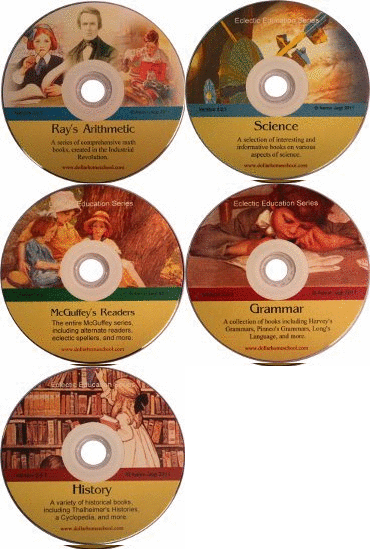
Thalheimer's Histories: A series of history books with a Christian perspective, accepting the Bible as historical fact, written in a interesting and inspiring manner.
Books for Young
Children:
Cromwell: A history and collection of letters from one of the greatest men of English History, Oliver Cromwell. A rare book on a man often overlooked by historians, Cromwell, a village Squire, became a general, who, after his first loss in which he learned the art of war, never lost a single battle.
Cyclopedia: This is a cyclopedia of "Commercial and Social Information, and Treasury of useful and Entertaining Knowledge" 737 pages long, covers topics ranging from Grammar and Etiquette, to playing Chess or the Piano. Very interesting reading. Wonder Book of
Knowledge: The marvels of modern industry and invention. Andrews Constitution: A Study of the Constitution of the United States. American
Poems: Selected Poems from America's Greatest Poets. Click Here to view sample pages and a complete list of books in the EES
Science
Norton's Elements of
Chemistry.
Norton's Elements of Natural Philosophy. 468 pages. This work is the result many years experience in teaching the subject of Physics, and is a thorough introduction to the forces involved in the subject.
Norton's Elements of Physics. 269 pages. This intriguing book is so well written that it does not feel so much like a dry text on the mathematics of physics as an exploration of physical laws, thus allowing someone well acquainted with physics or not at all to read this book with great enjoyment. Carefully illustrated, this book begins by introducing the student first to general notions of matter and force, and then introducing new elements one by one. Friction, adhesion, fluids, sound, light, heat, and electricity are all explored, with careful explanations of experiments and studies done by the scientists who explored these properties.
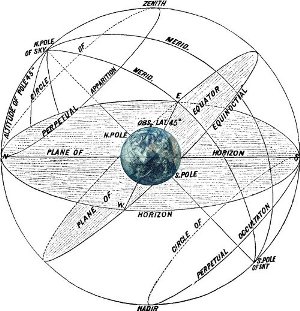
Ray's Elements of Astronomy. 342 pages. Taking a different approach to astronomy, rather than focusing on the Greek names for constellations this book focuses on the movements of heavenly bodies and the science of astronomy.
Ray's Surveying and Navigation. 492 pages. While this book thoroughly covers the old art of Surveying (the same business George Washington was in for a number of years) this book is especially useful because of it's great attention to the field of Plane and Spherical Trigonometry and Mensuration, and may because of this be used as a textbook for those fields.
Complete Book Keeping. 161 pages. An often over-looked area of study, book-keeping will always be an important area of expertise for anyone who earns or spends money. As the author states: “Book-keeping... cultivates the judicial powers of the mind... contributes to private and public virtue.. leads to economy and thrift... and it's practice will reduce pauperism and crime.” Beginning with the basic form of double entry book-keeping, Debit, Credit, and all areas of accounting are taught.
Schuyler's Principles of Logic. 169 pages. Logic is a mathematical pursuit. How can we tell? Through logic.... Because math is based on logical premises (induction), and then followed through in a logical working out of the premises (deduction). The author explains this more thoroughly, but you'll have to read the book.
Introduction to Botany. 372 pages. This is a short course on the study of the knowledge of forest, field, wayside, farm, orchard, garden. The most basic knowledge of plants is slowly being lost by those living in cities and lifestyles which exclude plants from our lives, but it is an interesting and even necessary area of expertise.
Nature Study: This book is a guide on how to observe and note experiments and studies in nature. First Year Science. 505 pages. Meant for High School Students, this book is an introduction to many different forms of science; Physics, Chemistry, Meteorology, Botany, Zoology, Physiology, Astronomy, Physiography, Forestry, and Agriculture are all treated. The language is kept simple, not technical, and the principles are thoroughly illustrated with experiments and pictures.
Political Economy. 396 pages. This book is an excellent introduction to economics. A knowledge of basic economics is a necessary thing for any person wishing to hold any job, especially one requiring management of a business or other people.
Simplified Industrial Mechanics. 289 pages. This is a technical book, providing problems and an answer key. It is a good beginning college course on the subject.
Guide to Health: A course on the body; how it works and how to maintain it.
Click Here to view sample pages and a complete list of books in the EES |

 |
|
|
|
|
|
|
|
|
|
|
|
|
|
|
|
 |
|||||||
|
|||||||
|
|||||||
|
|||||||
© Copyright Dollar Homeschool, 2008. All
Rights Reserved.