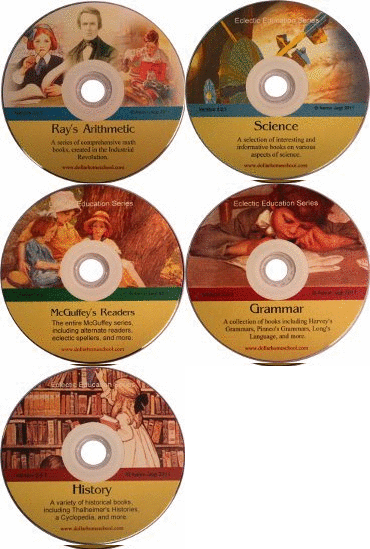
This is a list of some of the books included in the Eclectic Education Series. For
a complete list of the books, please e-mail us at
Ray's
Arithmetic
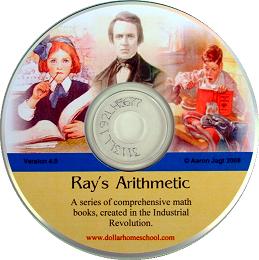
Basic Math
“An effort has been made
throughout the work to observe a natural and strictly logical connection between the different parts, so that
the learner may not be required to rely on a principle, or employ a process, with the rationale of which he is
not already acquainted”
 Ray's Primary
Arithmetic. 95 pages. The first book in the Ray's Series,
Primary Arithmetic starts at the very beginning of mathematics by teaching the children to count. The book
then slowly progresses with simple problems, first with addition, then subtraction, then multiplication and
division. The problems are very simple, so that the child can learn the concepts involved. Ray's Primary
Arithmetic. 95 pages. The first book in the Ray's Series,
Primary Arithmetic starts at the very beginning of mathematics by teaching the children to count. The book
then slowly progresses with simple problems, first with addition, then subtraction, then multiplication and
division. The problems are very simple, so that the child can learn the concepts involved.
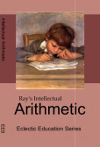 Ray's Intellectual
Arithmetic. 141 pages. Intellectual
Arithmetic begins by reviewing the basic concepts covered in Ray's Primary Arithmetic, adding more problems
and raising the difficulty. The book then adds the new concept of Fractions. Finally, it follows fractions
with the similar concept of percentages. As these concepts are introduced, applications for the problems are
given, showing the child how to solve increasingly complex problems, such as how to divide the rent of a farm
between two people considering that one mans livestock eats 1/3 less. Ray's Intellectual
Arithmetic. 141 pages. Intellectual
Arithmetic begins by reviewing the basic concepts covered in Ray's Primary Arithmetic, adding more problems
and raising the difficulty. The book then adds the new concept of Fractions. Finally, it follows fractions
with the similar concept of percentages. As these concepts are introduced, applications for the problems are
given, showing the child how to solve increasingly complex problems, such as how to divide the rent of a farm
between two people considering that one mans livestock eats 1/3 less.
 Ray's New Elementary
Arithmetic 192
pages. / Rudimentary Arithmetic. 193 pages. Ray's New Elementary Arithmetic was to a large extent a kind
of second version or redesign of Rudimentary Arithmetic, and large portions of Rudimentary Arithmetic are
incorporated in the Elementary text. Ray's New Elementary
Arithmetic 192
pages. / Rudimentary Arithmetic. 193 pages. Ray's New Elementary Arithmetic was to a large extent a kind
of second version or redesign of Rudimentary Arithmetic, and large portions of Rudimentary Arithmetic are
incorporated in the Elementary text.
Ray's New Elementary Arithmetic is designed to lead straight into
Practical Arithmetic, by providing an extensive amount of drill work for the student, in order to allow the
student ample time and problems to thoroughly master the fundamentals before moving forward.
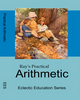 Ray's New Practical
Arithmetic. 337 pages. Practical Arithmetic
starts by quickly reviewing the basics of addition, subtraction, multiplication and division covered
previously in Elementary Arithmetic, and then moves into a study of different types of measurement, followed
by factoring, and a more involved study of fractions and percentages. After these mathematical bases have been
studied and mastered, real world applications for these mathematics are introduced. These include
Transactions, Commissions, Stock values and investments, Interest, Discounts, Monetary exchange, Insurance and
Taxes. Practical Arithmetic then concludes by introducing basic geometry. Ray's New Practical
Arithmetic. 337 pages. Practical Arithmetic
starts by quickly reviewing the basics of addition, subtraction, multiplication and division covered
previously in Elementary Arithmetic, and then moves into a study of different types of measurement, followed
by factoring, and a more involved study of fractions and percentages. After these mathematical bases have been
studied and mastered, real world applications for these mathematics are introduced. These include
Transactions, Commissions, Stock values and investments, Interest, Discounts, Monetary exchange, Insurance and
Taxes. Practical Arithmetic then concludes by introducing basic geometry.
Intermediate Math
”To fix the principles in the
mind of the student, and to show their bearing and utility, great attention has been paid to the preparation of
practical exercises.”
This continual grounding in practicality is a peculiar aspect of
Ray's Arithmetic, one which is very rare and very valuable. Modern math books have focused so much on the
abstract that the student is left to wonder how he will ever be able to use it in his day to day life; a feeling
that easily makes mathematics seem like a chore or useless exercise.
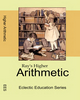 Ray's New Higher
Arithmetic. 409 pages. A very complete
study of Arithmetic, this is the last book in the Ray's series before the introduction of Algebra. All of the
basic mathematical methods are reviewed thoroughly; and more complicated applications and uses are explored.
Finally the book begins the study of Geometry, and the fundamentals of Trigonometry are introduced. Ray's New Higher
Arithmetic. 409 pages. A very complete
study of Arithmetic, this is the last book in the Ray's series before the introduction of Algebra. All of the
basic mathematical methods are reviewed thoroughly; and more complicated applications and uses are explored.
Finally the book begins the study of Geometry, and the fundamentals of Trigonometry are introduced.
 Ray's New Elementary
Algebra. 241 pages. “In introducing Algebra
to the student with Elementary Algebra, great care has been taken to make the student feel that he is not
operating with unmeaning symbols, by means of arbitrary rules; that Algebra is both a rational and practical
subject, and that he can rely on his reasoning, and the results of his operations with the same confidence as
in arithmetic. For this purpose, he is furnished, at almost every step, with the means of testing the accuracy
of the principles on which the rules are founded, and of the results which they produce.” Ray's New Elementary
Algebra. 241 pages. “In introducing Algebra
to the student with Elementary Algebra, great care has been taken to make the student feel that he is not
operating with unmeaning symbols, by means of arbitrary rules; that Algebra is both a rational and practical
subject, and that he can rely on his reasoning, and the results of his operations with the same confidence as
in arithmetic. For this purpose, he is furnished, at almost every step, with the means of testing the accuracy
of the principles on which the rules are founded, and of the results which they produce.”
I cannot stress highly enough the importance the above paragraph has
to a student embarking on a study of Algebra. From personal experience while studying with Saxon Algebra I know
just how frustrating it is to be told what to do, while not given any reasons for why we are doing it or how it
works. I didn't want to simply take their word for it but prove it for myself, a thought process most students
share. And while I did manage to work these things out eventually, it was a slow and painful process. One of the
things that make Ray's Arithmetic such an excellent series is the attention given to the student. Instead of
neglecting the reasoning and deducing ability of the students themselves, they are instead encouraged to think
on their own. This increases the students interest, his understanding of the material, as well as his
recollection of studies later on.
Ray's New Elementary Algebra focuses on the basic forms of Algebra.
Algebraic Fractions, Simple Equations, Powers, Roots, Radicals, and finally Quadratic Equations are among the
concepts explored. As always, after a concept has been taught, real-world applications for the process are given
to the student.
 Ray's New Higher
Algebra. 407 pages. After reviewing the
fundamentals, Higher Algebra then moves on to Theorems, Factoring, Algebraic Fractions, Quadratic Equations,
Ratio, Proportion, Binomial Theorem, etc etc. This book is quite lengthy, thoroughly teaching algebraic
concepts. While there are relatively few problems for the student to work on and solve, these have been
supplied by Test Problems for Higher
Algebra. 152 pages, as well
as A Complete Algebra. 359 pages. Ray's New Higher
Algebra. 407 pages. After reviewing the
fundamentals, Higher Algebra then moves on to Theorems, Factoring, Algebraic Fractions, Quadratic Equations,
Ratio, Proportion, Binomial Theorem, etc etc. This book is quite lengthy, thoroughly teaching algebraic
concepts. While there are relatively few problems for the student to work on and solve, these have been
supplied by Test Problems for Higher
Algebra. 152 pages, as well
as A Complete Algebra. 359 pages.
Advanced Math
 Ray's Treatise on Geometry and
Trigonometry. 421 pages. Begins by giving definitions for some
basic geometrical terms, then begins Geometry, starting with parallel lines, then continuing with Arcs and
Radii, the properties of triangles, Parallelograms, measuring area, Polygons, the geometry of space, Pyramids,
Prisms, etc. The book then continues on into the subject of Trigonometry, and supplies logarithmic tables. No
problems are supplied for the student in this book, which instead gives all it's attention to teaching the
concepts. It is suggested that the student use another book to provide problems while learning the
mathematical processes from this book. Ray's Treatise on Geometry and
Trigonometry. 421 pages. Begins by giving definitions for some
basic geometrical terms, then begins Geometry, starting with parallel lines, then continuing with Arcs and
Radii, the properties of triangles, Parallelograms, measuring area, Polygons, the geometry of space, Pyramids,
Prisms, etc. The book then continues on into the subject of Trigonometry, and supplies logarithmic tables. No
problems are supplied for the student in this book, which instead gives all it's attention to teaching the
concepts. It is suggested that the student use another book to provide problems while learning the
mathematical processes from this book.
 Ray's Analytic Geometry. 608 pages. Equations to the Right Line, the Plane, Quadrics, The Ellipse, The Hyperbola,
and Properties of Conics discussed with great fullness. Abridged Notation is introduced in this book. This
book does not supply problems for student work, focusing on teaching the concepts. Ray's Analytic Geometry. 608 pages. Equations to the Right Line, the Plane, Quadrics, The Ellipse, The Hyperbola,
and Properties of Conics discussed with great fullness. Abridged Notation is introduced in this book. This
book does not supply problems for student work, focusing on teaching the concepts.
 Ray's Differential and Integral
Calculus. 442 pages. Begins with definitions. Careful attention has
been given to the teaching of the doctrine of limits, which has been made the basis of both the Differential
and Integral Calculus. Problems are supplied in the book. Ray's Differential and Integral
Calculus. 442 pages. Begins with definitions. Careful attention has
been given to the teaching of the doctrine of limits, which has been made the basis of both the Differential
and Integral Calculus. Problems are supplied in the book.
History
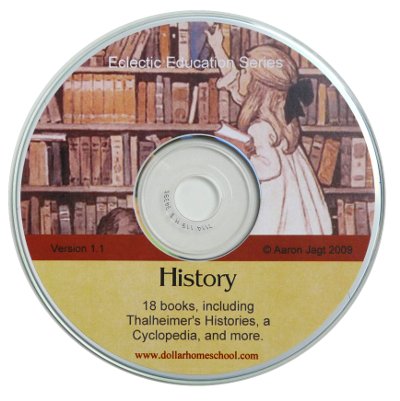
Thalheimer's
Histories: A series of history books with a Christian
perspective, accepting the Bible as historical fact, written in a interesting and inspiring
manner.
-
Ancient
History
-
History of
Scotland
-
General
History
-
Medieval
History
-
English
History
-
United States History
Cromwell: A history and collection of letters from
one of the greatest men of English History, Oliver Cromwell. A rare book on a man often overlooked by historians,
Cromwell, a village Squire, became a general, who, after his first loss in which he learned the art of war, never
lost a single battle.
-
Volume I
-
Volume II
-
Volume III
Progressive Course in Reading: Five books similar to the McGuffey's series, progressing in
difficulty and covering the following topics:
-
Stories
-
Studies
-
Rhymes
-
Riddles
-
Information
-
Literature
-
Oral Expression
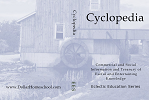 Cyclopedia: This
is a cyclopedia of "Commercial and Social Information, and Treasury of useful and Entertaining
Knowledge"737 pages long, covers topics ranging from Grammar and Etiquette, to playing
Chess or the Piano. Very interesting reading. Cyclopedia: This
is a cyclopedia of "Commercial and Social Information, and Treasury of useful and Entertaining
Knowledge"737 pages long, covers topics ranging from Grammar and Etiquette, to playing
Chess or the Piano. Very interesting reading.
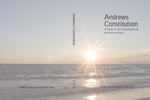 Andrews
Constitution: A Study of the Constitution of the United
States. Andrews
Constitution: A Study of the Constitution of the United
States.
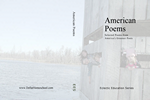 American
Poems: Selected Poems from America's Greatest
Poets. American
Poems: Selected Poems from America's Greatest
Poets.
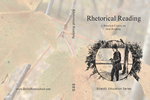 Rhetorical
Reading: A detailed course on Oral Reading. Often overlooked
but never more important, being able to speak eloquently is an important skill in todays video/media driven
world. Rhetorical
Reading: A detailed course on Oral Reading. Often overlooked
but never more important, being able to speak eloquently is an important skill in todays video/media driven
world.
Good Morals and Gentle Manners: A truly excellent book, addressing a subject of unequaled importance;
based on the proverbs, this book teaches that a gentleman and a lady must be distinguished by good manners,
and that good manners are the outgrowth of good morals.
Science
 Norton's Elements
of Chemistry. 301
pages. Norton's Science's are truly excellent;
a student who applied himself to any of these books will come away with a deep understanding of the subject.
Norton's Chemistry introduces the student to the classical experiments and studies of chemistry, and a basic
knowledge of the elements. Norton's Elements
of Chemistry. 301
pages. Norton's Science's are truly excellent;
a student who applied himself to any of these books will come away with a deep understanding of the subject.
Norton's Chemistry introduces the student to the classical experiments and studies of chemistry, and a basic
knowledge of the elements.
 Norton's Elements
of Natural Philosophy. 468 pages. This work
is the result many years experience in teaching the subject of Physics, and is a thorough introduction to the
forces involved in the subject. Norton's Elements
of Natural Philosophy. 468 pages. This work
is the result many years experience in teaching the subject of Physics, and is a thorough introduction to the
forces involved in the subject.
 Norton's Elements
of Physics. 269 pages. This intriguing book is so well written
that it does not feel so much like a dry text on the mathematics of physics as an exploration of physical
laws, thus allowing someone well acquainted with physics or not at all to read this book with great enjoyment.
Carefully illustrated, this book begins by introducing the student first to general notions of matter and
force, and then introducing new elements one by one. Friction, adhesion, fluids, sound, light, heat, and
electricity are all explored, with careful explanations of experiments and studies done by the scientists who
explored these properties. Norton's Elements
of Physics. 269 pages. This intriguing book is so well written
that it does not feel so much like a dry text on the mathematics of physics as an exploration of physical
laws, thus allowing someone well acquainted with physics or not at all to read this book with great enjoyment.
Carefully illustrated, this book begins by introducing the student first to general notions of matter and
force, and then introducing new elements one by one. Friction, adhesion, fluids, sound, light, heat, and
electricity are all explored, with careful explanations of experiments and studies done by the scientists who
explored these properties.
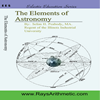 Ray's Elements of
Astronomy. 342 pages. Taking a different approach to astronomy,
rather than focusing on the Greek names for constellations this book focuses on the movements of heavenly
bodies and the science of astronomy. Ray's Elements of
Astronomy. 342 pages. Taking a different approach to astronomy,
rather than focusing on the Greek names for constellations this book focuses on the movements of heavenly
bodies and the science of astronomy.
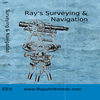 Ray's Surveying
and Navigation. 492 pages. While this book thoroughly covers the
old art of Surveying (the same business George Washington was in for a number of years) this book is
especially useful because of it's great attention to the field of Plane and Spherical Trigonometry and
Mensuration, and may because of this be used as a textbook for those fields. Ray's Surveying
and Navigation. 492 pages. While this book thoroughly covers the
old art of Surveying (the same business George Washington was in for a number of years) this book is
especially useful because of it's great attention to the field of Plane and Spherical Trigonometry and
Mensuration, and may because of this be used as a textbook for those fields.
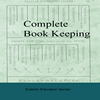 Complete Book Keeping. 161 pages. An
often over-looked area of study, book-keeping will always be an important area of expertise for anyone who
earns or spends money. As the author states: “Book-keeping... cultivates the judicial powers of the mind...
contributes to private and public virtue.. leads to economy and thrift... and it's practice will reduce
pauperism and crime.” Beginning with the basic form of double entry book-keeping, Debit, Credit, and all areas
of accounting are taught. Complete Book Keeping. 161 pages. An
often over-looked area of study, book-keeping will always be an important area of expertise for anyone who
earns or spends money. As the author states: “Book-keeping... cultivates the judicial powers of the mind...
contributes to private and public virtue.. leads to economy and thrift... and it's practice will reduce
pauperism and crime.” Beginning with the basic form of double entry book-keeping, Debit, Credit, and all areas
of accounting are taught.
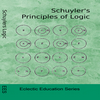 Schuyler's Principles of Logic. 169
pages. Logic is a mathematical pursuit. How can we tell? Through logic.... Because math is based on logical
premises (induction), and then followed through in a logical working out of the premises (deduction). The
author explains this more thoroughly, but you'll have to read the book. Schuyler's Principles of Logic. 169
pages. Logic is a mathematical pursuit. How can we tell? Through logic.... Because math is based on logical
premises (induction), and then followed through in a logical working out of the premises (deduction). The
author explains this more thoroughly, but you'll have to read the book.
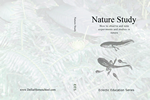 Nature Study: This book is a guide
on how to observe and note experiments and studies in nature. Nature Study: This book is a guide
on how to observe and note experiments and studies in nature.
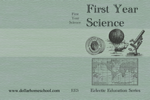 First Year Science. 505 pages. Meant for High School Students, this book is an introduction to many
different forms of science; Physics, Chemistry, Meteorology, Botany, Zoology, Physiology, Astronomy,
Physiography, Forestry, and Agriculture are all treated. The language is kept simple, not technical, and the
principles are thoroughly illustrated with experiments and pictures. First Year Science. 505 pages. Meant for High School Students, this book is an introduction to many
different forms of science; Physics, Chemistry, Meteorology, Botany, Zoology, Physiology, Astronomy,
Physiography, Forestry, and Agriculture are all treated. The language is kept simple, not technical, and the
principles are thoroughly illustrated with experiments and pictures.
 Political Economy. 396 pages. This book is an excellent introduction to
economics. A knowledge of basic economics is a necessary thing
for any person wishing to hold any job, especially one requiring management of a business or other
people. Political Economy. 396 pages. This book is an excellent introduction to
economics. A knowledge of basic economics is a necessary thing
for any person wishing to hold any job, especially one requiring management of a business or other
people.
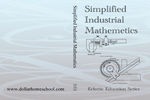 Simplified Industrial
Mechanics. 289 pages. This is a technical book, providing problems
and an answer key. It is a good beginning college course on the subject. Simplified Industrial
Mechanics. 289 pages. This is a technical book, providing problems
and an answer key. It is a good beginning college course on the subject.
 Guide to
Health: A course on the body; how it works and how to maintain it. Rated
G in case you were worried. Guide to
Health: A course on the body; how it works and how to maintain it. Rated
G in case you were worried.
McGuffey's Readers
These are the 1879 edition of McGuffey's Readers, or third edition.
 McGuffey's 1st Eclectic Reader and McGuffey's
Primer;containing the alphabet and lessons, simple and easy, for
little learners.
McGuffey's 1st Eclectic Reader and McGuffey's
Primer;containing the alphabet and lessons, simple and easy, for
little learners.
-
 McGuffey's
2nd Eclectic Reader and McGuffey's Alternate
2nd Eclectic Reader; easy lessons in reading
and spelling, for young pupils. McGuffey's
2nd Eclectic Reader and McGuffey's Alternate
2nd Eclectic Reader; easy lessons in reading
and spelling, for young pupils.
-
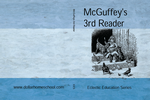 McGuffey's
3rd Eclectic Reader and McGuffey's Alternate
3rd Eclectic Reader; interesting and
instructive primary lessons, for young pupils. McGuffey's
3rd Eclectic Reader and McGuffey's Alternate
3rd Eclectic Reader; interesting and
instructive primary lessons, for young pupils.
-
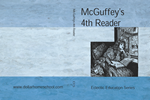 McGuffey's
4th Eclectic Reader and McGuffey's Alternate
4th Eclectic Reader; chaste and instructive
lessons in prose and poetry, for the young. McGuffey's
4th Eclectic Reader and McGuffey's Alternate
4th Eclectic Reader; chaste and instructive
lessons in prose and poetry, for the young.
-
 McGuffey's
5th Eclectic Reader and McGuffey's Alternate
5th Eclectic Reader; choice extracts in prose
and verse, for middle classes. McGuffey's
5th Eclectic Reader and McGuffey's Alternate
5th Eclectic Reader; choice extracts in prose
and verse, for middle classes.
-
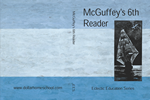 McGuffey's
6th Eclectic Reader; a rhetorical reading book,
for the more advanced classes. McGuffey's
6th Eclectic Reader; a rhetorical reading book,
for the more advanced classes.
-
 McGuffey's New High School
Reader; copious classic exercises, for the highest classes in
schools and academies. McGuffey's New High School
Reader; copious classic exercises, for the highest classes in
schools and academies.
-
 McGuffey's Word List; contains the
words of McGuffey's Revised Primer and Readers in the order in which they are first met in the
successive lessons. McGuffey's Word List; contains the
words of McGuffey's Revised Primer and Readers in the order in which they are first met in the
successive lessons.
-
 McGuffey's Eclectic Speaker;
comprising three hundred exercises for reading or declamation. This book may be used as a reader or
speaker; the selections being peculiarly adapted to the double purpose of declamation and reading in
High Schools. McGuffey's Eclectic Speaker;
comprising three hundred exercises for reading or declamation. This book may be used as a reader or
speaker; the selections being peculiarly adapted to the double purpose of declamation and reading in
High Schools.
-
 McGuffey's Juvenile
Speaker, for Common Schools: choice and animating exercises
in speaking or reading, designed for young pupils. McGuffey's Juvenile
Speaker, for Common Schools: choice and animating exercises
in speaking or reading, designed for young pupils.
-
 McGuffey's Eclectic
Speller; containing more than 12,000 words, with rules and
examples for the formation of derivatives. McGuffey's Eclectic
Speller; containing more than 12,000 words, with rules and
examples for the formation of derivatives.
-
 McGuffey's Familiar
Animals and McGuffey's Living Creatures: McGuffey's
Natural History Readers are intended to furnish supplementary reading within a field which is always
fresh, interesting, and instructive to children. McGuffey's Familiar
Animals and McGuffey's Living Creatures: McGuffey's
Natural History Readers are intended to furnish supplementary reading within a field which is always
fresh, interesting, and instructive to children.
-
Hemans Reader for Female Schools; containing extracts in Prose and Poetry.
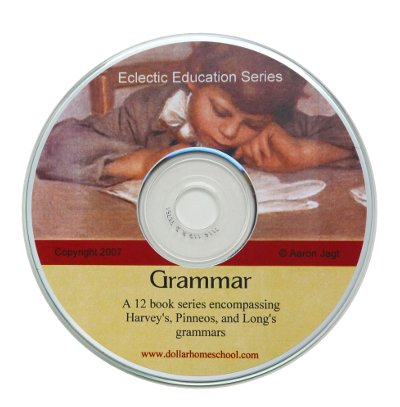
The Grammar Series
Longs Language-
1st,
2nd,
3rd, and
4thReader
Grade: Based upon the principle that the child learns by example and
practice, these books lead the beginning student to write correctly from the very outset, giving him or her correct
habits which will last through a lifetime.
Pinneo’s
Grammar– These
booksprovide a comprehensive study for the intermediate to advanced student
interested in understanding the rules which organize the English Language.
 1. Pinneo’s Primary
Grammar: A simple and thorough elementary work for common schools,
illustrated by very copious exercises and examples. 1. Pinneo’s Primary
Grammar: A simple and thorough elementary work for common schools,
illustrated by very copious exercises and examples.
 2. Pinneo’s Analytic
Grammar: A thorough and complete exposition of the principles of the
English Language, explaining it intricacies and idioms. 2. Pinneo’s Analytic
Grammar: A thorough and complete exposition of the principles of the
English Language, explaining it intricacies and idioms.
 3. Pinneo’s English
Teacher: A very exhaustive work on the analysis and synthesis of
English sentences, containing a great number and variety of exercises adapted to training the mind of the
pupil to the habit of using language accurately, elegantly, and forcibly. 3. Pinneo’s English
Teacher: A very exhaustive work on the analysis and synthesis of
English sentences, containing a great number and variety of exercises adapted to training the mind of the
pupil to the habit of using language accurately, elegantly, and forcibly.
 4. Pinneo’s Composition: Graduated lessons on English Composition, with appropriate directions, exercises, and
models, designed to teach the art of composing with accuracy and elegance. 4. Pinneo’s Composition: Graduated lessons on English Composition, with appropriate directions, exercises, and
models, designed to teach the art of composing with accuracy and elegance.
 5. Pinneo’s False Syntax: This work contains many exercises in False Syntax, systematically arranged. Promiscuous
exercises are also added, embracing intermingled examples of correct and incorrect syntax, designed to test
thoroughly the pupil’s knowledge of the subject. 5. Pinneo’s False Syntax: This work contains many exercises in False Syntax, systematically arranged. Promiscuous
exercises are also added, embracing intermingled examples of correct and incorrect syntax, designed to test
thoroughly the pupil’s knowledge of the subject.
Harvey’s
Grammar– For more
advanced students, these books may be used for the pupil who has some previous grammar knowledge, or as a research
tool for looking up an alternate or perhaps clearer explanation to that given in Pinneo’s Grammar.
 Harvey’s Elementary
Grammar: This book is split into three parts. Part one consists of
lessons in technical grammar, sentence-making, and composition. This course of instruction is introductory to
that given in part two, which contains a concise yet exhaustive statement of the properties and modifications
of the different parts of speech. Part three covers the different types of punctuation. Harvey’s Elementary
Grammar: This book is split into three parts. Part one consists of
lessons in technical grammar, sentence-making, and composition. This course of instruction is introductory to
that given in part two, which contains a concise yet exhaustive statement of the properties and modifications
of the different parts of speech. Part three covers the different types of punctuation.
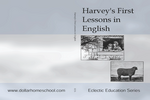 Harvey’s First Lessons in
English: This manual is an extension and application of the
principles sketched out in the “Oral Lessons” of Harvey’s
Elementary Grammar. Harvey’s First Lessons in
English: This manual is an extension and application of the
principles sketched out in the “Oral Lessons” of Harvey’s
Elementary Grammar.
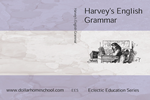 Harvey’s English Grammar: This book has four parts, each covering one of the four parts of grammar. These
are Orthography (elementary sounds, letters, and spelling), Etymology (classification, derivation, and
properties of words), Syntax (construction of sentences), and Prosody (quantity of syllables, of accent, and
of the laws of versification). Harvey’s English Grammar: This book has four parts, each covering one of the four parts of grammar. These
are Orthography (elementary sounds, letters, and spelling), Etymology (classification, derivation, and
properties of words), Syntax (construction of sentences), and Prosody (quantity of syllables, of accent, and
of the laws of versification).
Teachers Books
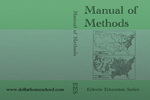 Manual of Methods. 261. pages. This is possibly the most valuable book for mothers; it's a guide to all of
the subjects included in the EES with instructions on how they can be taught. Manual of Methods. 261. pages. This is possibly the most valuable book for mothers; it's a guide to all of
the subjects included in the EES with instructions on how they can be taught.
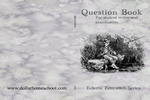 Question Book. 165. This book is full of
an assortment of problems from the Eclectic Education Series. It's purpose is to allow the teacher or student
to review their over-all knowledge from their studies. Question Book. 165. This book is full of
an assortment of problems from the Eclectic Education Series. It's purpose is to allow the teacher or student
to review their over-all knowledge from their studies.
 Successful Teaching in Rural
Schools. 294 pages. This is a selection of letters, a record of the
achievements of teachers in rural schools using the Eclectic Education Series. Successful Teaching in Rural
Schools. 294 pages. This is a selection of letters, a record of the
achievements of teachers in rural schools using the Eclectic Education Series.
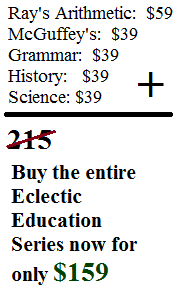
|  The Complete
Collection
The Complete
Collection